
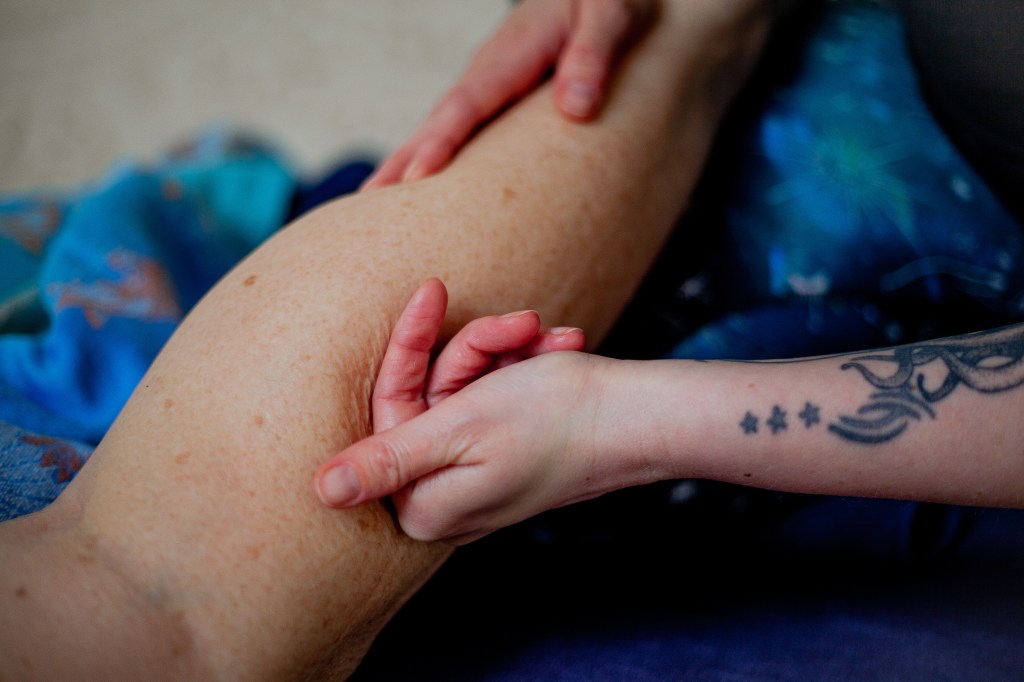
Something I’ve been thinking about for a while is the fact that healing is not a linear experience. Part of the way I work with clients is through multiple treatments, usually starting off close together to address a specific issue, and then getting further apart to maintain general health and mobility. What I’ve often seen in the clinic is someone comes in with a specific problem, the problem is causing them a lot of distress – emotional and physical – and they might have been through GPs or other medical professionals before they’ve reached me. Sometimes, and this is something in my personal experience I’ve seen happen more with those who identify as women, their issue has been dismissed as ‘hormonal – nothing we can do’ or ‘well that’s just life’ or ‘sorry there’s nothing specific we can find in blood tests or physical examinations’. And they’re sent away, wondering if this is all in their head.
But the issue is still there, and it’s still causing the same problem – or in some cases a worsening problem, so they reach out sometimes in desperation.
Or maybe they’ve had a short course of treatments and they’ve been discharged, but the issue is still rumbling along in the background not completely solved.
A few summers ago I was seeing a client every few weeks. They had a formal diagnosis from a consultant, but they were on a waiting list for follow ups from departments the consultant had referred them to and those waiting lists ran to years long. They were finding their range of movement was deteriorating, which was affecting their quality of life, and they often had days where they felt they couldn’t move because of the pain. They came to me because a family member had suggested I might be able to help in some way – as usual the client had low expectations and was in the “anything is better than doing nothing” mentality. We had a consultation – a space which allowed them to talk about their condition, explain how it affected them, what they had been able to do, what they wanted to be able to do and share their uncertainties. Then I did the first treatment, and at the end the client cried because they felt it was the first time they’d felt heard and understood as a person rather than a condition. They left on a high, feeling happier and looser and more able to move.
Great results right? Sure but this often happens in a first treatment and then well..treatment 2 they come back, now they have really high expectations. We go through a catch up, find out how things had or hadn’t improved (they had but also there were some personal stresses which had reared their heads around drs and appointments) and do the treatment. After the treatment they still feel ok but, it’s not as revolutionary as the first treatment and there’s a little bit of a “let down” feeling. This is really common. The third treatment they got that same feeling as in the first treatment… And we’re seeing some progress at each appointment but also we’re seeing sometimes that the pain creeps back in, or the symptoms ramp up for whatever life based reason.
While this might feel like a setback week to week, the position you’re starting from is better than when you came in from that first appointment and progress back to good is faster.
Fast forward 6 treatments over two and a half months; our catchups include snippets of the client’s life, they are doing more social activities, they’ve walked to the appointment, they’ve even been on a night out. The progress has been immense, and though to the client this is their new normal and they’re still concentrating a little on the fact that there is still pain, I have to gently remind that we are so so far from the state they were in when they walked through the clinic door that first time. Yes there is still some pain – and it is less than it was, and they are doing more than they thought they could.
I think this is why taking measures – social, emotional and physical – are important to show the road that is travelled. With pain, often you only have the energy to be in the moment and it can be hard to see the bumpy and winding road you’re taking to recovery. And the recovery is still happening, step by step – so try and measure it over some time and see how far you’ve come.
 Applesea Therapies
Leave a comment